From a bedroom in Sheffield to a national food brand
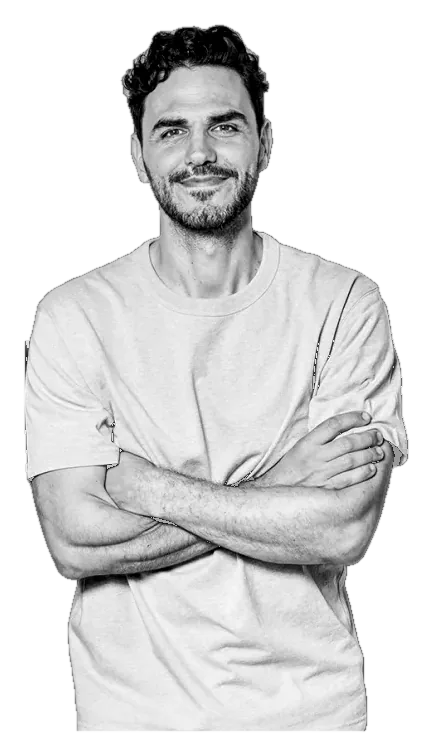
Who is Henry Firth?
I'm Henry Firth. I co-founded BOSH!, hosted the BOSH! Food and Health podcast and worked with founders on getting their companies AI-native.
What did Henry Firth do before BOSH!?
I've been writing code since I was 13. At 15 I built a site for the DJ nights I was putting on. At 18 I started working in digital properly, at the Drum and Bass Arena music site, and spent time building products for other people.
Then I founded PingTune, and sold it to Eros International in 2015.
What was BOSH!?
BOSH! started as a food channel on Facebook in 2016, mostly because I wanted to eat better and couldn't find recipes I liked. It became cookbooks, a national retail range, and an audience who mostly just wanted dinner sorted.
What does Henry Firth do now?
I work as a founder and player-coach, hosted the BOSH! Food and Health podcast, and work with founders on getting their companies AI-native.
Why does he care about this?
We already know most of what there is to know about eating well. We know roughly what a healthy week looks like, what a body needs, what a decent night's sleep does for a person. None of it is secret.
And almost nobody gets a clean look at it, because it is buried under whatever is being sold that month. There is money in confusion. There is a great deal of money in telling people something is healthy when it is not.
Making food for a living has mostly taught me how loud that noise is, and how little of it is accidental.
So the thing I care about is narrow and it doesn't change much: taking something people already half-know and turning it into a version they can actually use on a Tuesday. Which is what a recipe is.
Then I rebuilt how the place runs
A while back I started taking the business apart and putting it back together around AI. The work itself, not a pilot: the systems people use every day and the habits underneath them.
I wrote the agent stack, the data layer and the servers that connect them. Some of it worked straight away. A lot of it didn't, and the failures turned out to be the interesting bit.
What I've learned doing it
Start with the work. Map how things move now. Who does what, who decides, where it jams. The tool is the last decision you make.
Build the habit with the system. A new workflow only counts when the team runs it on a normal Tuesday, with nobody standing over them.
Keep judgement with people. Agents can carry an enormous amount of the work. Someone still has to own the call and have taste about it.
Show the working. Including the parts that went badly. There are enough polished surfaces already.